Why OTP’s Proposed Luminor Acquisition Warrants a Baltic National-Security Review
Hungary's OTP Group has signed a conditional agreement to acquire Luminor Bank AS. An evidence-based analysis of why expanding Russian retail earnings, Russian database legislation (Law 492-FZ), and legacy predecessor AML portfolios warrant stringent national-security and technical scrutiny.
When financial infrastructure intersects with frontline regional security, standard commercial M&A assessments are insufficient. Reviewing the acquisition of the third-largest banking group in the Baltics by an institution with substantial Russian earnings and statutory data-access obligations in Moscow requires exhaustive national-security, data-governance, and prudential scrutiny.
On July 20, 2026, Hungary’s OTP Group entered a conditional agreement to acquire 100% of Tallinn-headquartered Luminor Holding AS from a consortium led by private equity firm Blackstone (holding 80.05%) and Norway’s DNB Bank ASA (holding 19.95%).
While consolidation is standard across European retail banking, this transaction cannot be evaluated strictly through a commercial lens. Operating across Estonia, Latvia, and Lithuania with approximately €15.9 billion in balance-sheet assets and serving over 870,000 retail, corporate, and institutional clients, Luminor is an Other Systemically Important Institution (O-SII) along the European Union’s Eastern Flank.
The European Central Bank (ECB)—which holds the final prudential decision-making authority—alongside Estonia’s Financial Supervision and Resolution Authority (Finantsinspektsioon) and Baltic national security authorities, must assess this transaction through a rigorous prudential and national-security framework.
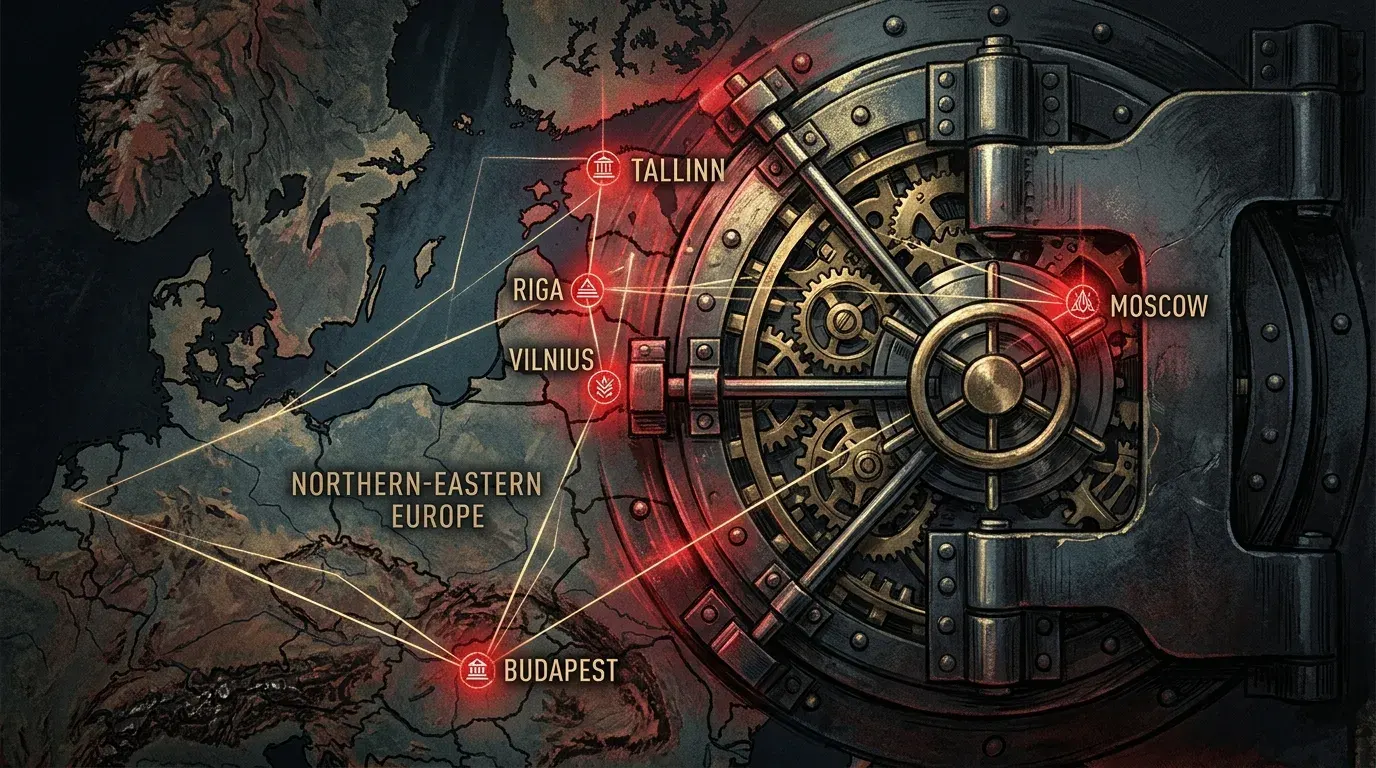
1. Valuation Dynamics and the Baltic Banking Landscape
Blackstone initially agreed to acquire a 60% controlling stake in Luminor in September 2018 for €1 billion, completing the transaction in September 2019 to consolidate the Baltic operations of Nordea and DNB. In 2022, Blackstone expanded its holding to 80.05% by acquiring Nordea’s remaining stake.
When Blackstone explored divestment options in 2024, no acquisition bid from a traditional Nordic banking group was publicly announced.
The consideration for the current transaction has not been officially disclosed. Third-party market estimates have placed Luminor’s valuation at approximately €1.65 billion (estimated below book value), though this figure has not been confirmed by OTP, Blackstone, or DNB. DNB Bank ASA concurrently announced that it agreed to divest its remaining 19.95% shareholding, noting that an estimated accounting loss of approximately NOK 1 billion (€85–90 million) will be recognized in the third quarter of 2026 in connection with reclassifying the investment as held for sale.
| Financial Metric | Luminor Holding AS (2025) | OTP Group (Pre-Deal, Q1 2026) | Transaction Note |
|---|---|---|---|
| Total Balance Sheet Assets | €15.9 billion | €124.0 billion | Combined assets ~€140.0 billion (+13%) |
| Net Loan Portfolio | €11.5 billion | ~€69.0 billion | Combined loans ~€80.5 billion |
| Eurozone Loan Share | 100% (Baltics) | 42% of net loans | Would increase Eurozone share to ~50% |
| Common Equity Tier 1 (CET1) | 20.2% | 17.6% | Subject to regulatory capital consolidation |
| Return on Equity (ROE) | 8.6% (Net profit €158M) | 21.0% (Normalized) | Combined ROE not disclosed |
| Cost-to-Income (C/I) | 64.2% | ~40.0% (Group average) | Combined C/I not disclosed |
2. The Russian Profit Engine: Operational Reality vs. Exit Barriers
While many Western European credit institutions have systematically downsized or liquidated their operations in the Russian Federation under supervisory pressure, OTP Group’s Russian subsidiary has continued to generate substantial earnings.
OTP Group has stated that it explored exit options, but that Russian presidential decrees impose severe 50% valuation discounts and require direct presidential approval for foreign bank sales, presenting genuine legal and financial obstacles to a swift departure. At the same time, OTP’s Russian retail business has demonstrated rapid operational expansion:
- 2025 Financial Results: In 2025, OTP Bank Russia saw its profit increase 48% to HUF 202 billion, total assets rise 40%, and gross customer loans expand 56%. This growth was driven almost entirely by retail lending, while corporate lending contracted by 40%.
- H1 2026 Profit Contribution: According to OTP Group’s H1 2026 report, the Russian subsidiary generated HUF 106.4 billion in profit after tax with a 41.8% return on equity (ROE), contributing approximately 22% of OTP Group’s consolidated adjusted profit.
- €460 Million in Dividends: Between 2023 and 2024, OTP Group successfully extracted and repatriated €460 million in dividends from its Russian subsidiary to the parent entity in Budapest.
- Extensive Retail Footprint: According to OTP Bank Russia, the subsidiary serves approximately 2 million active clients across 800 service locations and more than 57,000 consumer-loan points of sale.
A banking group deriving more than a fifth of its consolidated earnings from a market subject to Kremlin regulatory decrees represents a distinct structural risk profile when entering the Baltic banking market.
3. Corporate Governance and Regional Energy Trade
OTP Group’s governance structure and historical business relationships in Central Europe have frequently been examined by financial journalists and investigative networks.
- Dr. Sándor Csányi (Chairman, OTP Bank): Dr. Csányi, who served as Chairman and CEO until May 2025 and continues as Chairman of the Board (with Péter Csányi serving as CEO), is also a key figure in Hungarian energy conglomerate MOL Group. Investigative reporting by the Organized Crime and Corruption Reporting Project (OCCRP) documented that Normeston Trading, an offshore entity that traded over $10 billion in Russian crude oil supplied by firms including Lukoil and Bashneft, indicated in its financial reports that it guaranteed approximately $18 million in payments to Proton Energy through OTP Bank.
- Megdet Rahimkulov: Former Gazprom executive Megdet Rahimkulov historically accumulated a major stake in OTP Bank, later transferring much of the family’s Hungarian investment portfolio to his sons, Ruslan and Timur. Rahimkulov was named in the U.S. Treasury’s 2018 CAATSA report on Russian oligarchs—which the U.S. Treasury explicitly stated was not itself a sanctions list—and was subsequently subjected to Ukrainian sanctions.
These reported relationships illustrate the historical intersections between regional banking and cross-border energy trade across Central and Eastern Europe.
4. Predecessor Legacy: Historical Non-Resident AML Exposures
A critical consideration for supervisors is Luminor’s inherited history. Luminor was created in 2017 by merging the Baltic operations of Nordea and DNB during an era when the Baltic banking sector handled large volumes of non-resident Eastern European capital.
In 2022, OCCRP and its Baltic partners reported on two leaked 2019 internal reviews conducted by Luminor’s internal auditors and Alvarez & Marsal. The audits examined a decade of transactions totaling €1.6 trillion across the legacy Baltic operations:
- Audit Scope: The reviews identified €3.9 billion in “problematic transfers” and a further €17.3 billion in transactions warranting additional investigation. These figures describe risk indicators and review populations within legacy portfolios, rather than sums judicially established as money laundering.
- Documented Case Studies: The reporting highlighted historical counterparties connected to regional capital flows, including nodes linked to the Russian and Azerbaijani Laundromats, Diron Trade LLP (a company reported as having been used in the Russian money-laundering scheme uncovered by Sergei Magnitsky), and SCT Lubricants (which conducted transactions involving Belarusian state refinery Naftan while Naftan was under U.S. sanctions; SCT stated that applicable EU sanctions had not been imposed at the time of the transactions and denied wrongdoing).
- Sanctioned Oligarch Accounts: Accounts historically associated with Russian industrial figures (such as Alexey Mordashov and Dmitry Mazepin, who were sanctioned by Ukraine following the 2014 annexation of Crimea and later by the EU and US) were offboarded as Luminor conducted comprehensive portfolio remediation.
In response to the 2022 reporting, Luminor stated that it proactively engaged financial regulators, instituted comprehensive internal controls, and found no systemic customer-risk weaknesses in its modern operations. According to Luminor Holding’s 2025 Annual Report, Luminor reports that it has strengthened its compliance and cybersecurity processes and brought previously outsourced critical IT services under greater internal control, holding zero direct credit exposure to entities registered in Russia, Belarus, or Ukraine, and only €1 million to natural persons residing there.
Following earlier supervisory notices in 2021 and a $35 million penalty by the New York State Department of Financial Services (NYDFS Consent Order) against Nordea in 2024 for historical monitoring failures in its former Baltic branches, Luminor has overhauled its compliance architecture under Blackstone’s ownership. Regulators must ensure that introducing an acquirer with active Russian operations does not create new vulnerabilities or compromise these remediated controls.
5. The Data Governance and Security Question: Federal Law No. 492-FZ
A central security question examined here concerns data governance, privileged-access controls, and cross-border jurisdictional reach.
On 28 December 2025, Russia enacted Federal Law No. 492-FZ, amending the relevant provisions of Article 15 of Federal Law No. 40-FZ (the Law on the Federal Security Service). From 1 April 2026, the FSB may, upon an authorised order, obtain copies of all or part of databases belonging to organisations where it considers the information necessary for its statutory duties. The provision does not itself create continuous or remote technical access to those organisations’ systems and does not automatically extend to Luminor’s systems outside Russia.
However, this statutory requirement creates a crucial technical and regulatory question for European authorities:
The Regulatory Question: Does any shared IT infrastructure, centralized group software, consolidated risk database, customer due-diligence data transfer, or administrative user access connect OTP’s parent operations in Budapest and its Russian subsidiary with Luminor’s Baltic banking systems?
Luminor manages deposit accounts, payment flows, and credit facilities for 870,000 retail, corporate, and institutional clients across the Baltic economies.
OTP Bank’s group-level due diligence privacy notice notes that OTP Bank Russia does not upload data to the central due diligence database, but retains access to specific group-level due diligence records, listing Russia as a third-country data recipient for correspondent-banking due diligence data.
While OTP Group’s public disclosures describe strict subsidiary separation and access controls, European supervisors cannot rely on standard commercial assurances alone. Regulators must verify that no Russia-based entity, personnel, or infrastructure—and no unauthorized third-country party—can access, query, or replicate Luminor customer or operational data.
6. Baltic Regulatory Scrutiny and Sovereign Oversight
The proposed acquisition has triggered careful scrutiny across Baltic capitals:
- Lithuania: The Bank of Lithuania stated that “the fact that the group operates in Russia raises justified questions”. Furthermore, Parliamentary National Security and Defence Committee member Mindaugas Lingė formally appealed to the Commission for the Coordination of Protection of Objects of Importance to National Security, the Bank of Lithuania, and the State Security Department (VSD) to assess national security risks and propose a clear timeline for exiting Russia.
- Latvia: Latvia’s State Security Service (VDD) had already assessed risks associated with OTP’s continued Russian operations and informed senior officials and the Bank of Latvia in 2025. LSM reported that President Edgars Rinkēvičs noted he had reviewed that assessment and expected financial regulators to consider it carefully. Concurrently, Latvian Prime Minister Andris Kulbergs stated that politicians should not interfere in a legitimate commercial transaction, while acknowledging that the risks cannot be entirely excluded and customer trust remains essential.
- The Approval Architecture: Because Luminor Holding AS is registered in Tallinn, Estonia’s Finantsinspektsioon is responsible for conducting the qualifying-holding assessment and preparing a draft proposal. The final prudential decision rests with the European Central Bank (ECB), alongside any national foreign-investment or security-screening procedures applicable in the Baltic states.
Five Supervisory Requirements for European Regulators
To safeguard Baltic financial stability and prevent geopolitical vulnerabilities along the EU’s Eastern Flank, European regulators should enforce five strict criteria before considering any approval:
- Formal National-Security Clearance: The ECB and Finantsinspektsioon must incorporate exhaustive intelligence and national-security assessments from Estonia (KAPO), Latvia (VDD), and Lithuania (VSD).
- Technical and Data Segregation: Luminor’s customer and operational data must remain within a segmented, EU-hosted architecture with separate identity management, encryption keys, and privileged-access controls. Russia-based personnel or infrastructure must have no access, and all cross-border data flows must be independently audited.
- Russian Business Ring-Fencing: Legally enforceable restrictions must prevent Luminor from providing funding, guarantees, liquidity support, correspondent services, or risk transfers to OTP’s Russian subsidiary.
- Transparent Resolution of Russian Operations: Clear, time-bound supervisory benchmarks for OTP Group’s eventual exit or structural separation from its Russian business.
- Continuous Third-Party AML Monitoring: Independent, ongoing forensic oversight of Luminor’s correspondent accounts and non-resident compliance frameworks.
The proposed acquisition of Luminor Bank by OTP Group is far more than a private equity asset rotation; it is a fundamental test of European banking supervision in a contested geopolitical environment.
Financial stability cannot be decoupled from national defense. European regulators must ensure that no transaction compromises the security, privacy, and integrity of the Baltic financial system.
